How AI Is Collapsing the Cost of High-End Web Design (And What It Means for Your Business)
AI web design cost reduction is no longer a future trend. It is happening now, and the numbers are stark. Multi-model AI workflows are producing professional-grade websites, complete with animated hero video, polished typography, and full navigation, at a fraction of what traditional agency production costs. For engineers and technical managers accustomed to evaluating build-versus-buy decisions, this shift has direct implications for how your organization allocates resources on digital deliverables.
AI web design cost reduction is the measurable decrease in time, labor, and budget required to produce professional-grade digital assets when AI models handle image generation, video animation, and code assembly in a coordinated workflow. In life sciences and regulated manufacturing environments, where vendor qualification and marketing compliance timelines add overhead to every digital project, this cost compression can materially accelerate how quickly compliant, professional-facing materials reach production.
A workflow demonstrated by AI educator Nate Herk using Seedance 2.0 and Claude Code makes the mechanics visible. What used to require a strategist, a designer, a developer, and a motion graphics artist now runs through a sequenced chain of AI models with a single operator reviewing output at each stage.
FREE GUIDE
Stop Writing Design Specs by Hand
Get the free visual guide: how AI tools generate GAMP 5 documentation directly from your PLC and DCS exports. Used by Life Sciences engineers who are done doing it manually.
No spam. Unsubscribe anytime.
How Multi-Model AI Workflows Replace Traditional Web Design Production Pipelines
The process Herk demonstrates works as follows. An AI image generator produces a series of high-quality architectural renders. Those images are fed into Seedance 2.0, ByteDance’s video generation model, which animates them into seamless looping hero videos of the kind you typically see on the homepages of premium design firms. Those video assets are then handed to Claude Code, Anthropic’s AI coding agent, along with a plain-language prompt describing the desired site. The agent assembles the full site: layout, typography, navigation, and visual hierarchy.
The output is a polished, visually sophisticated website produced rapidly, with minimal manual coding, and without a dedicated design or development team.
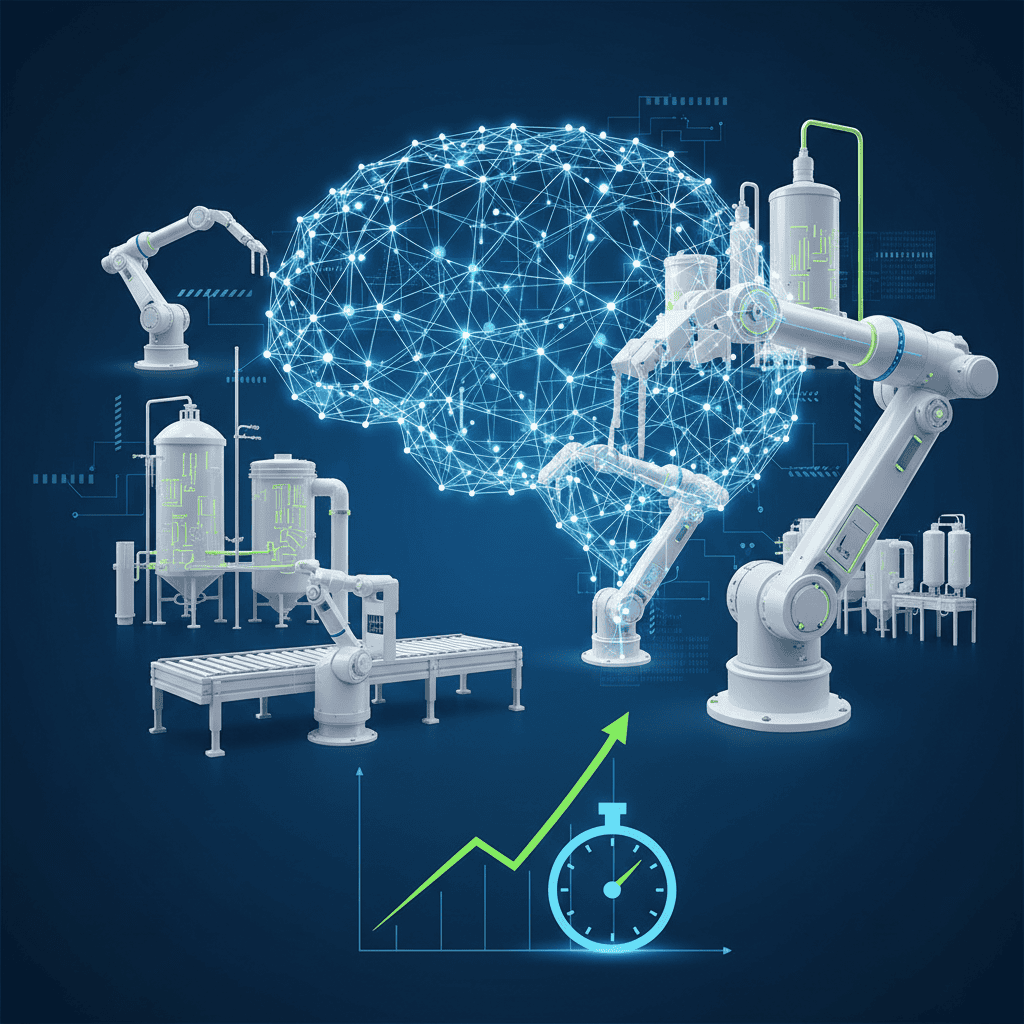
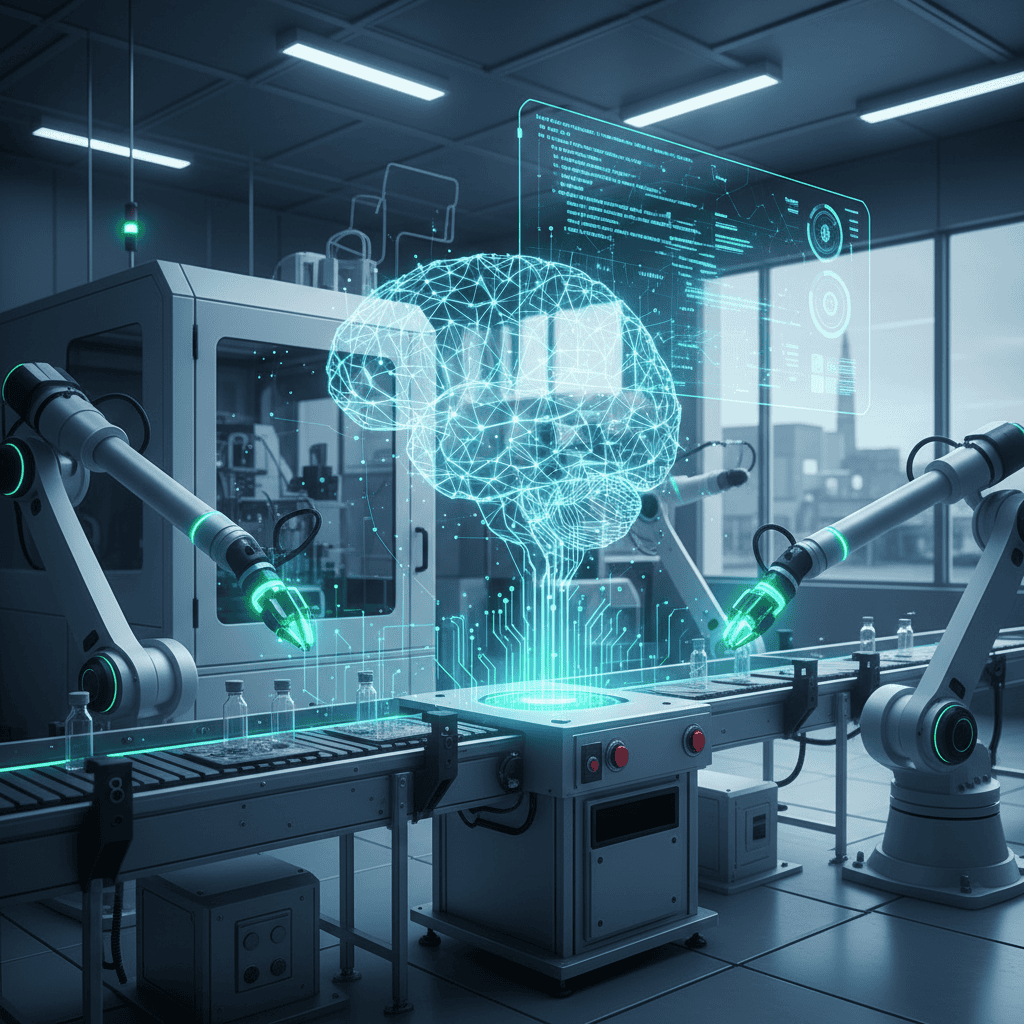
The technical backbone is a multi-model API platform that chains different AI models in sequence. Think of it as an assembly line where each station is a specialized AI and the operator’s job is to define the workflow, write the prompts, and review the output at each step. That is a description any process engineer will recognize immediately.
Why AI Web Design Cost Reduction Matters Beyond Marketing Budgets
The surface story is about websites. The deeper story is about what happens when creative and technical production costs collapse at the same time.
For years, building a premium digital presence required assembling a team and paying each specialist separately. That cost structure effectively gated high-end digital production behind budget thresholds that excluded smaller operations, early-stage ventures, and internal teams without agency support.
Multi-model AI workflows are removing those gates. The same logic applies to product demos, pitch decks, marketing landing pages, training portals, investor materials, and client-facing tools. Any deliverable that previously required orchestrating multiple specialists is now a candidate for AI-assisted production.
For technical professionals, this is not only a cost story. It is a speed story. Faster iteration means faster testing. Faster testing means faster learning about what works with your audience. That is a competitive advantage that compounds over time, and in a regulated industry where speed to market is a genuine differentiator, it is worth treating seriously.
AI Orchestration: The Practitioner Skill That Is Replacing Subcontracting
My read on this workflow is that it is significant not because it is technically complex, but precisely because it is not. The barrier is no longer coding skill or design expertise. It is knowing which tools to connect and in what order. That is a workflow problem, and workflow problems are solvable by business-minded engineers and technical managers who are willing to experiment.
The professionals who will extract the most value from AI in the next two to three years are not necessarily the ones with the deepest software backgrounds. They are the ones who understand their domain, know what good output looks like, and can orchestrate AI tools to get there reliably. That description fits a lot of the engineers and quality managers I work with.
The skill being rewarded here is what practitioners are calling AI orchestration: the ability to define a goal, identify the right sequence of AI models to achieve it, prompt each one effectively, and quality-check the output at each stage. It is less about writing code and more about judgment, domain knowledge, and process design. Those are competencies the life sciences workforce already has in abundance.
Practical Entry Points for Technical Teams Evaluating AI-Assisted Digital Production
If you manage marketing deliverables, consider what a workflow like this could mean for campaign landing pages or product-specific microsites. If you run an internal communications function, think about training portals and compliance-facing documentation that currently requires vendor coordination. If you are a solo consultant or small-team operator, this is a direct path to producing outputs that previously required subcontracting to specialists.
The starting point is straightforward. Pick one output your team produces repeatedly. Map the steps required to create it. Ask which of those steps an AI model could handle. You may be surprised how far down that list the answer reaches.
The $10,000 website proposal is not going away. Premium positioning still carries value. But the cost to produce something that looks and functions at that level is dropping fast, and the gap between what AI-savvy operators can produce and what traditional production pipelines deliver is widening every quarter.
Frequently Asked Questions: AI Web Design Cost Reduction for Technical and Regulated Industries
How much can AI actually reduce web design costs compared to hiring an agency?
Reported cost reductions vary by project scope, but workflows combining AI image generation, AI video animation, and AI coding agents have produced agency-quality outputs at 10 to 20 percent of traditional agency pricing for comparable deliverables. The larger savings come from eliminating coordination overhead across multiple specialists and compressing revision cycles from weeks to hours. For organizations that produce digital assets repeatedly, those savings accumulate quickly.
Is AI-generated web content compliant with FDA or regulatory marketing requirements?
AI tools generate the structure, visuals, and code. Regulatory compliance review remains the responsibility of the qualified personnel on your team, exactly as it would with any agency-produced content. AI-assisted production does not change the review and approval requirements under FDA promotional guidelines or applicable EU regulations. It changes how fast a draft reaches the review stage, which can shorten your overall cycle time if your internal review process is the current bottleneck.
What technical skills does someone need to run a multi-model AI web design workflow?
No software development background is required to operate these workflows at a functional level. The core competency is prompt engineering combined with the ability to evaluate output quality against a defined standard. Engineers and quality managers who can write a clear specification document and apply critical judgment to draft outputs already have the foundational skills. Familiarity with a multi-model API platform such as the one used in the Herk demonstration shortens the learning curve considerably.
Which AI models are currently used in multi-model web design workflows?
The workflow demonstrated by Nate Herk chains a text-to-image model for architectural renders, Seedance 2.0 from ByteDance for video animation of those images, and Claude Code from Anthropic for site assembly from a plain-language prompt. The specific models in any given workflow will evolve as the tooling landscape develops, but the architectural pattern of chaining specialized models in sequence is stable and transferable across model generations.
How do AI-assisted workflows affect quality control for digital deliverables in GMP environments?
In GMP-adjacent contexts, the operator review step at each model handoff functions analogously to an in-process check in a manufacturing workflow. Output quality depends on prompt specificity, defined acceptance criteria for each stage, and a documented review process. Teams that apply the same rigor to AI workflow outputs that they apply to other production processes will find the quality control model familiar. The difference is that the production speed is significantly higher, which means more review cycles are possible within the same calendar time.
Start Building AI Orchestration Competency Now, Not After Your Competitors Do
The professionals building AI orchestration skills today are the ones who will be setting the pace two years from now. In life sciences and regulated manufacturing, where digital infrastructure increasingly supports commercial, regulatory, and operational functions, that competency gap will be measurable in business outcomes.
Identify one repeatable deliverable. Map its production steps. Test an AI-assisted workflow against your current process. The experiment is low-cost, the learning is immediate, and the compounding advantage of starting early is real.
Get the visual guide for this post.
Subscribe to Life Sciences, Automated and get the slide deck delivered to your inbox — plus every future issue.

Get the visual guide for this post: Get the visual guide